Romería de Los Dolores: Tradition and Volcanoes in Lanzarote
Every September, Lanzarote celebrates one of the island’s most emblematic festivals: the Romería de Nuestra Señora de los Dolores, also known as the Virgin of the Volcanoes. Thousands of people gather in Mancha Blanca, in the municipality of Tinajo, to honour the Virgin and keep alive a tradition that is deeply connected with Lanzarote’s volcanic history.
In 2026, the Romería will take place on Saturday, 12 September. During these days, Mancha Blanca becomes a meeting place for local people and visitors, with religious celebrations, music, traditional folklore, handicrafts and cultural activities.

Why is the Virgin of Los Dolores known as the Virgin of the Volcanoes?
The connection between the Virgen de los Dolores and the volcanoes of Lanzarote dates back to the great eruptions of Timanfaya between 1730 and 1736.
The legend of the miracle of Mancha Blanca
According to local tradition, in April 1736 lava flows were seriously threatening Tinajo and the surrounding area. The inhabitants organised a procession towards the area of Guiguan, carrying an image of the Virgin of Los Dolores.
They promised to build a chapel if the Virgin managed to stop the advancing lava.
According to the legend, one of the villagers went ahead of the procession and planted a wooden cross directly in front of the lava flow. Shortly afterwards, the lava stopped when it reached the spot where the cross had been placed.
The inhabitants interpreted what had happened as a miracle and cried:
“¡Milagro, milagro!” — “Miracle, miracle!”
The story did not end there. According to local tradition, years later a young girl named Juana Rafaela encountered a mysterious woman dressed in black, who reminded the people of Tinajo of the promise they had made to build a chapel.
When the girl later recognised the woman in an image of the Virgin of Los Dolores, the villagers finally fulfilled their promise.
The sanctuary of Nuestra Señora de los Dolores in Mancha Blanca was built as a result of this tradition. (read the full story according to Ayunt. Tinajo)

A second miracle during the 1824 eruption
The connection between the Virgin and Lanzarote’s volcanoes became even stronger almost 90 years later.
On 31 July 1824, a volcano in the area between Tao and Tiagua began to erupt. Once again, local inhabitants feared that the new eruption could threaten their homes and farmland.
A procession was organised with the image of the Virgin of Los Dolores. The procession reached the area of Tamia, where the image was placed facing the volcano while the faithful prayed for the eruption to stop.
According to local tradition, shortly afterwards the volcano stopped producing lava and began emitting only smoke and water.
Once again, the event was interpreted as the intervention of the Virgin.
This second story further strengthened the association between Nuestra Señora de los Dolores and the volcanoes of Lanzarote, giving rise to her popular name: Virgen de los Volcanes – Virgin of the Volcanoes.
The Romería de Los Dolores: a festival full of colour
The Romería de Los Dolores is much more than a religious celebration. For visitors to Lanzarote, it is a wonderful opportunity to experience a living part of the island’s culture and traditions.
During the pilgrimage, families and groups of friends arrive in Mancha Blanca dressed in traditional Canarian costumes. Many people walk along the roads and paths leading to the sanctuary, some travelling considerable distances, accompanied by music, singing and traditional instruments.

A friendly and welcoming atmosphere
The atmosphere during the Romería is lively, cheerful and welcoming.
Families, friends and groups of pilgrims walk together towards the sanctuary, while traditional music fills the streets and the surrounding area.
And there is something that makes this particular pilgrimage especially spectacular: the landscape.
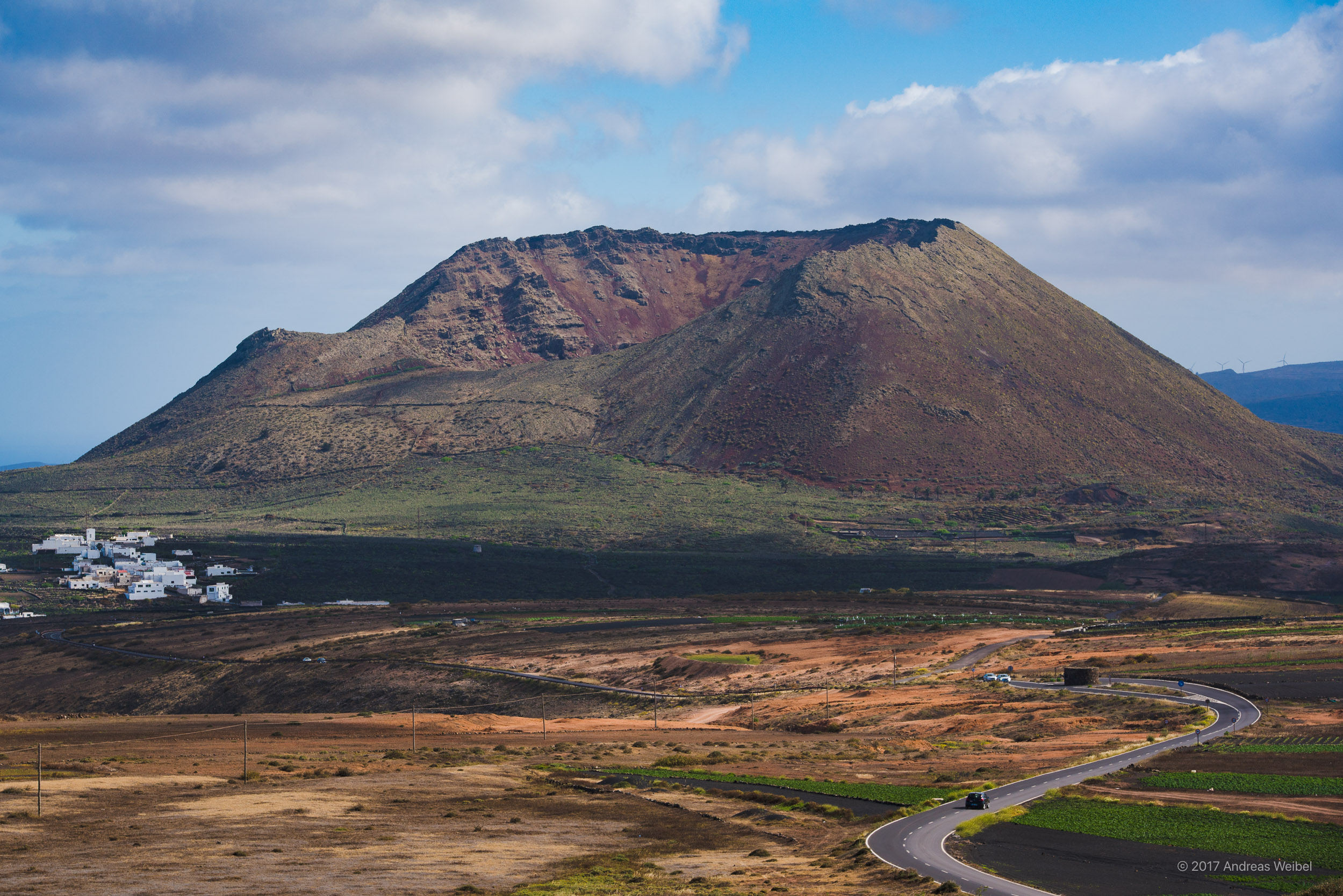
As the pilgrims, families and traditional carts pass through the countryside, the volcanic landscape of Timanfaya forms a dramatic backdrop.
Straw hats, colourful skirts, scarves and traditional costumes contrast with the black, ochre and reddish tones of Lanzarote’s volcanic landscape.
For photographers, it is a true visual feast.

The Handicraft Fair and a whole week of celebrations
The Romería is only one of the highlights of the Los Dolores celebrations.
During the festivities, Mancha Blanca also hosts the Feria Insular de Artesanía, the Island Handicraft Fair, one of Lanzarote’s most important cultural and craft events.
The fair brings together artisans from Lanzarote and other Canary Islands, showcasing traditional crafts, local products and techniques that form part of the cultural heritage of the archipelago.
The celebrations also include cultural activities, traditional folk music and performances, creating a particularly lively atmosphere in Mancha Blanca throughout the week.

When is the Romería de Los Dolores in 2026?
The main pilgrimage will take place on: Saturday, 12 September 2026
The religious celebrations and associated cultural activities extend over several days around 15 September, the feast day of Nuestra Señora de los Dolores.
If you are visiting Lanzarote during this period, it is well worth including Mancha Blanca in your itinerary.
A festival that connects culture and volcanic landscape
For us, the Romería de Los Dolores has another special significance.
Few events illustrate so clearly the relationship between the people of Lanzarote, their culture and the island’s volcanic landscape.
The volcanoes that we now admire as a spectacular landscape were, almost three centuries ago, a very real threat to the people living in this part of the island.
The eruptions of 1730–1736 transformed enormous areas of Lanzarote. Lava flows buried farmland and came dangerously close to settlements including Mancha Blanca, Guiguan and Tinajo.
Today, however, the same landscape provides the extraordinary setting for one of Lanzarote’s most colourful traditional celebrations.

Where did the lava threatening Mancha Blanca and Tinajo come from?
If you look at the landscape around Mancha Blanca, it is natural to wonder where the lava that once threatened these villages actually came from.
Which volcanoes produced these lava flows?
Why did some flows advance towards Mancha Blanca and Tinajo while others followed completely different routes?
And how did the enormous eruption of 1730–1736 create the landscape we see today?
These are precisely some of the questions we explore during our guided excursions through Lanzarote’s volcanic landscapes.
Discover Lanzarote’s volcanoes with Olita Trek & Bike
If, during your visit to Lanzarote, you would like to understand what really happened during the Timanfaya eruptions of 1730–1736, how the volcanic landscape was formed and where the lava flows came from, we invite you to discover it with us.
During our guided volcanic excursions in Lanzarote, we don’t simply walk among craters and lava fields. We try to reconstruct the story of the eruptions and explain how these volcanoes transformed the island forever.
And perhaps, after discovering this story, you will see the Romería de Los Dolores in a different way.
You will no longer see simply a procession crossing a volcanic landscape, but a tradition that was born from the relationship between the people of Lanzarote and the volcanoes that surrounded them — a relationship shaped by fear, faith, hope and, ultimately, gratitude.